
Run
Monitoring and on-call
Knowing the site is down before your customer calls to tell you.
Most of the outages we inherit were not caught by an alert: they were reported by an unhappy customer, often days later. The opposite exists too, more insidiously: monitoring that sends so many alerts nobody reads them any more. An alert should be rare, accurate, and say what to do. We watch uptime, application errors, server resources, and above all what nobody watches: the overnight jobs that were supposed to run and no longer do.
The method
How we work
- 01
We decide what deserves to wake someone up
An alert ignored three times is a dead alert, and it silences all the others. We separate what needs immediate action from what can wait until tomorrow.
- 02
We watch from outside and from inside
From outside: does the site answer, is the certificate valid. From inside: application errors, memory, disk, queues. The two do not catch the same failures.
- 03
We centralise the logs
All logs in one place, searchable over several weeks. Without that, diagnosing yesterday's outage means hoping the file was not overwritten.
- 04
We verify that what should have run, ran
Backups, imports, scheduled sends. An overnight job that stops raises no visible error: you find out weeks later, when the data is missing.
What you get
Deliverables
- check_circleThe probes in place, with thresholds written down and discussed
- check_circleCentralised, searchable logs
- check_circleThe alerting channel: who is notified, how, within what delay
- check_circleA written report after each incident: what happened, what will stop it recurring
The proof
Where we have done it
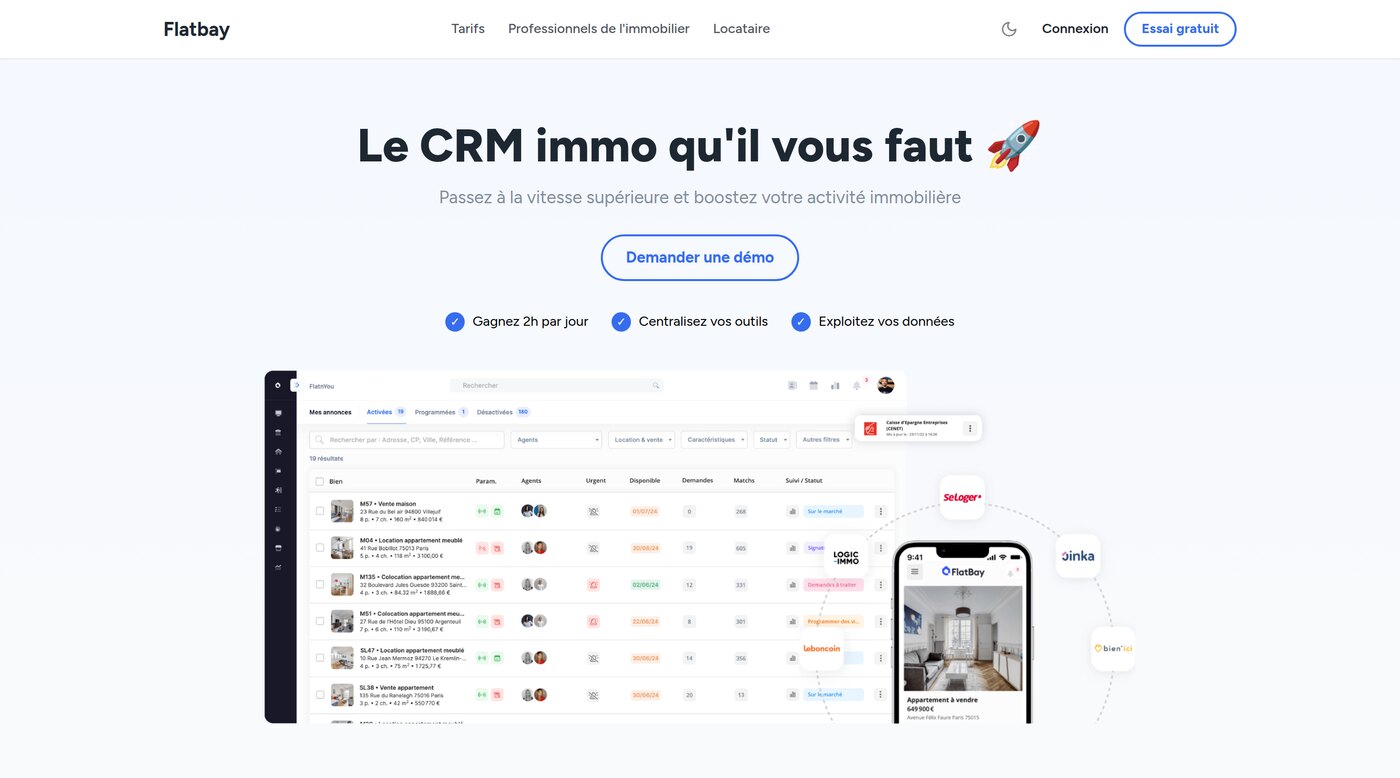
FlatBay
Since 2015Agencies drowning in incomplete files. An assistant that chases missing documents, computes the affordability ratio, and only passes on complete applications.
Read the case studyarrow_forward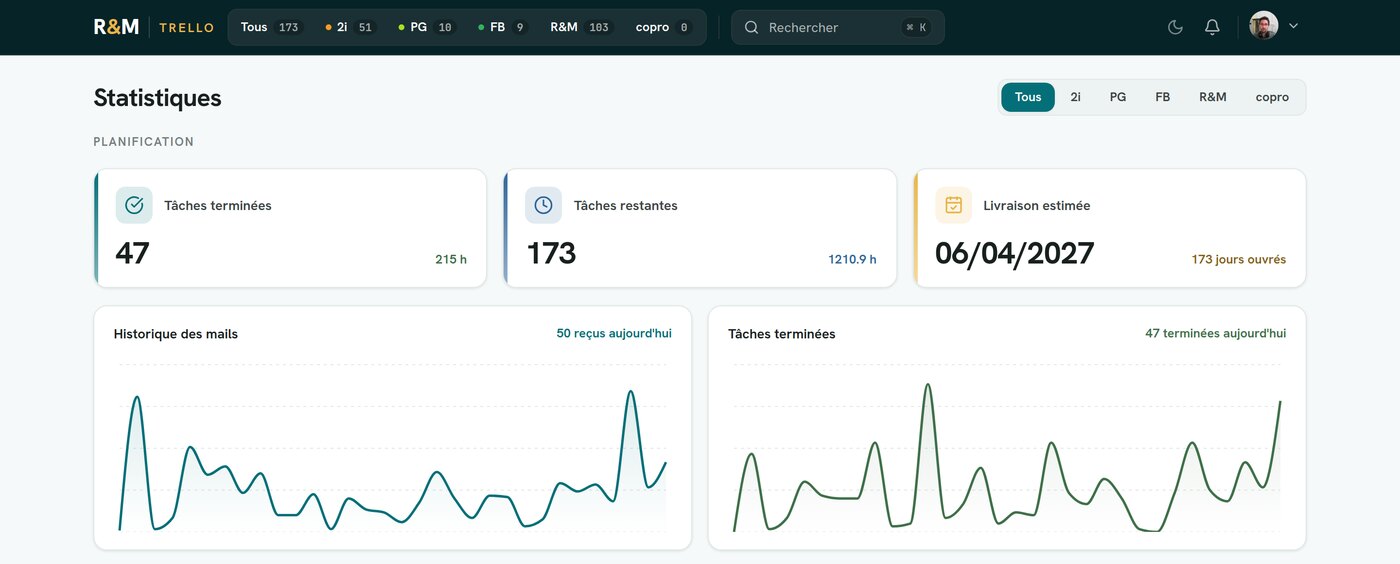
Pilotage & support IA
Since 2025Requests arrive by email, by WhatsApp, by web form. They are qualified, attached to the right project, and a reply is drafted — a human approves before it is sent.
Read the case studyarrow_forward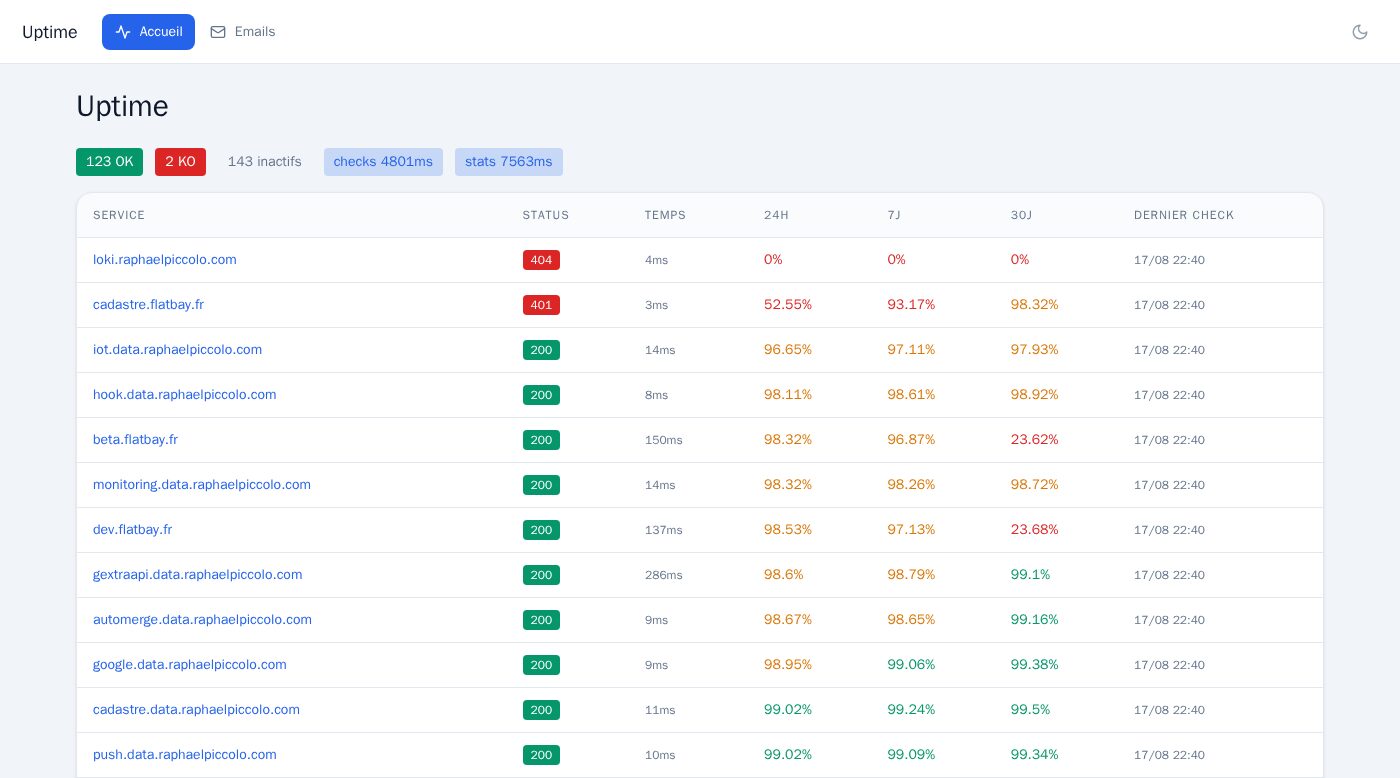
Notre flotte
Since 2010Git, continuous integration, image registry, SSO, DNS, metrics, logs, monitoring: all of it runs on our own machines, on open-source components. Not out of principle — because it holds load better, costs a fraction, and does not stop when a vendor changes its mind.
Read the case studyarrow_forwardFrequently asked questions
- Do you respond at night and at weekends?
- Depending on the contract. We would rather be straight about it: genuinely round-the-clock on-call requires an organisation a small firm cannot seriously promise. What we can hold, we put in writing; what we cannot, we do not sell.
- How long are logs kept?
- One month by default, which comfortably covers incident diagnosis. Longer where a regulatory obligation requires it — in which case the duration is decided alongside the processing register, not at random.
- Will you monitor an application you did not write?
- Yes. Uptime, certificates, resources and scheduled jobs can be watched from outside, whatever the technology. Fine-grained application error monitoring does require access to the code.
Also in “Run”
Infrastructure and hosting
Your servers, held by people who administer them daily for other clients too.
account_treeCI/CD and DevOps
Deploying should be a non-event, several times a week, with no meeting.
speedWeb performance
A slow site loses customers before it has introduced itself. That can be measured and fixed.
mark_email_readEmail and deliverability
Do your automated emails actually arrive? Usually, some of them do not.
Let's talk about your project
Thirty minutes is enough to tell whether we are the right fit. We reply within 48 hours, and we say no when it is not for us.