
Build
Legacy migration and code takeover
An application nobody dares touch any more, brought back into shape without stopping the business.
Every company we work with has, somewhere, an application whose supplier has gone, whose technology is no longer maintained, or part of whose code nobody understands any more. A complete rewrite in one go is the reflex — and the most reliable way to fail: for eighteen months nothing moves for the business, and on switchover day you discover the rules you had forgotten. We migrate screen by screen, with the old and new versions coexisting, until there is nothing left to migrate.
The method
How we work
- 01
We take over what exists and make it run
Before judging, we install and execute. Plenty of supposedly incomprehensible codebases are mostly undocumented — not the same thing, nor the same price.
- 02
We set the oracle: current behaviour is the spec
The old version is the specification, oddities included — those are usually a forgotten business rule. We compare screen by screen; we do not reinvent along the way.
- 03
We migrate in pieces, never in one block
Both versions live behind the same address, users move over screen by screen. At every step, rolling back takes minutes.
- 04
We keep the addresses and the data
Redirects, stable identifiers, history preserved. A migration that loses old links or renumbers records does more damage than it repairs.
- 05
We cut cleanly at the end
Once everything is migrated, the old system is removed. Leaving both in place “just in case” creates two truths and doubles the maintenance, indefinitely.
What you get
Deliverables
- check_circleAn inventory of what exists: what is used, what is not, what is risky
- check_circleThe migration plan in batches, with the order and rollback for each
- check_circleThe migrated application, behaviour identical and verified screen by screen
- check_circleThe old version switched off, and its documentation archived
The proof
Where we have done it
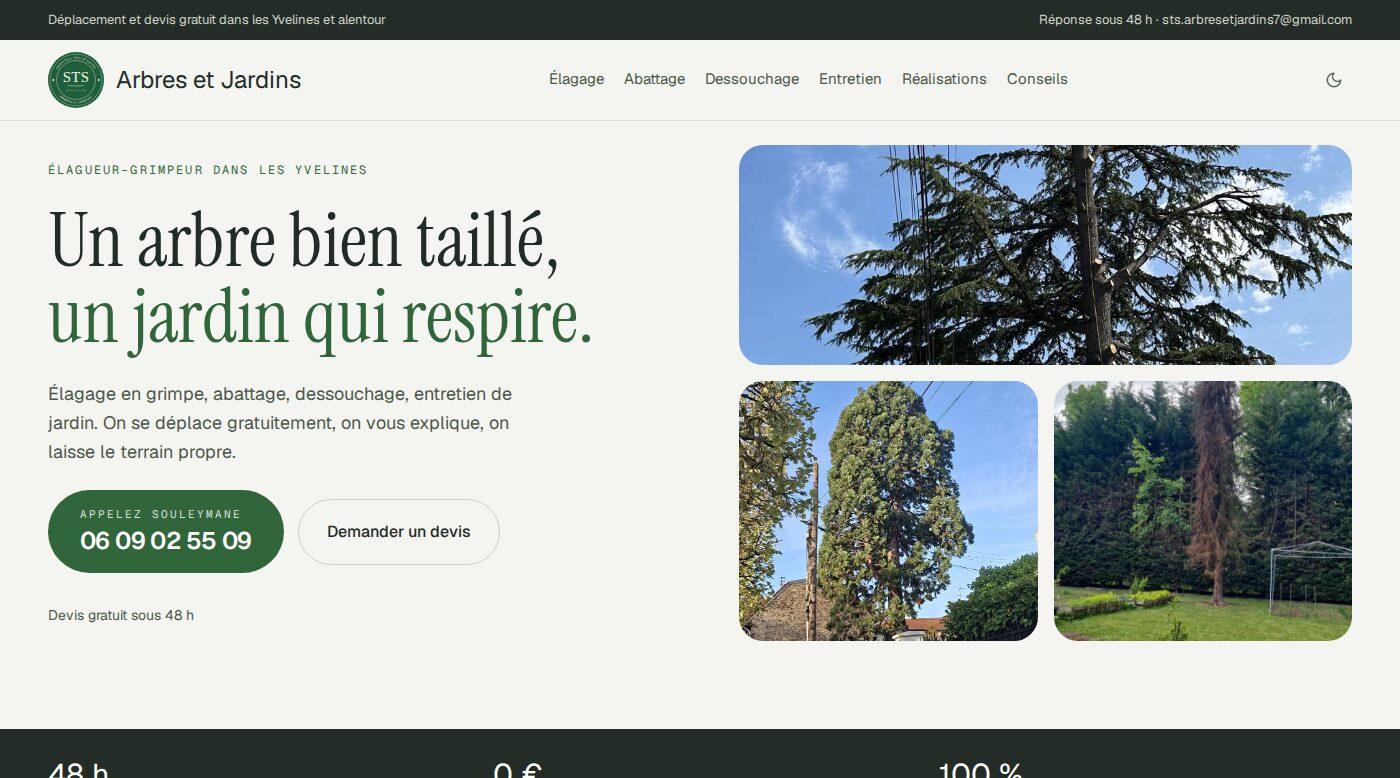
STS Arbres et Jardins
Since 2026A one-year-old site built on an abandoned theme, with an American contact page still live. Full rebuild, migration off WordPress, and local pages built on verified facts.
Read the case studyarrow_forward
Gextra
Since 2010Admissions, care records, staff scheduling, billing, mobile apps. A complete business system, being migrated screen by screen to modern technology without stopping the work.
Read the case studyarrow_forward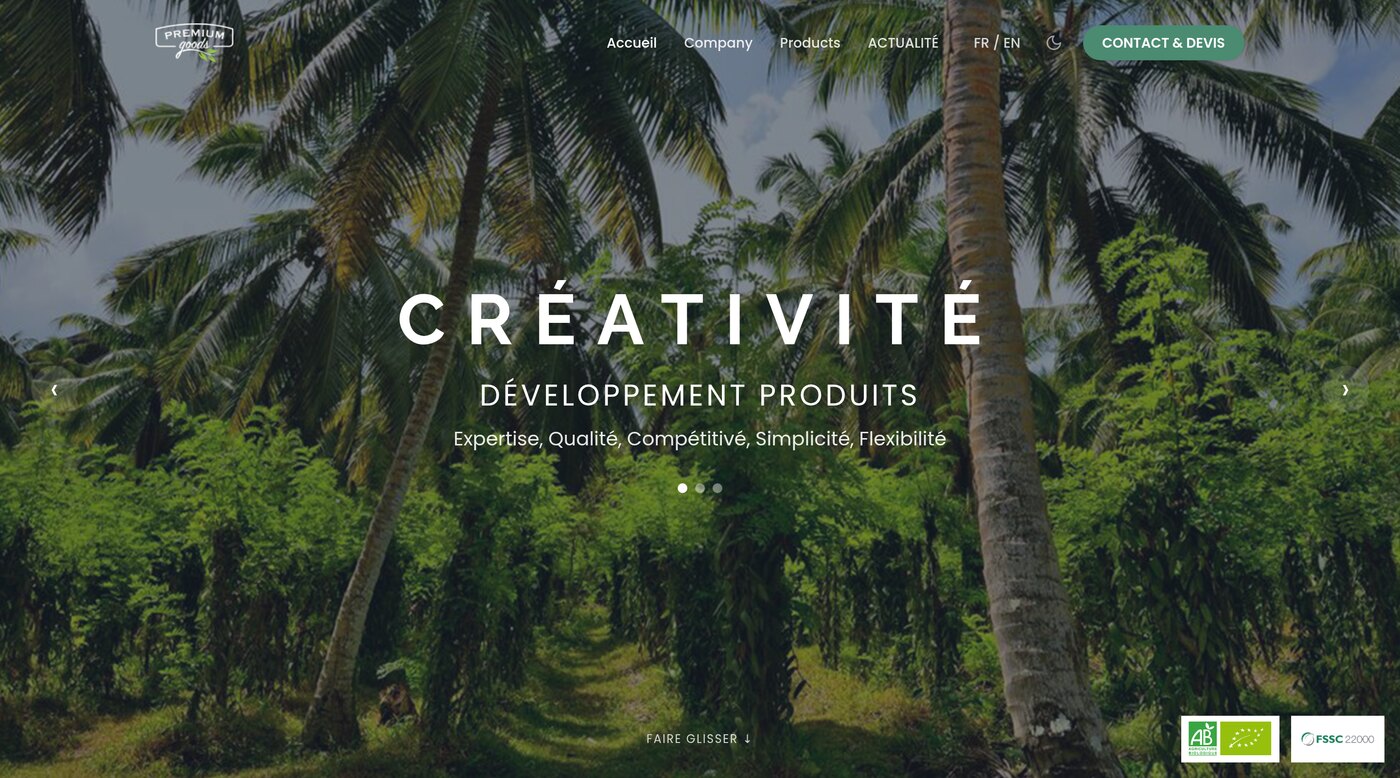
Premium Goods
Since 2019An online shop and the internal tool that runs it: stock, orders, suppliers, field work. Modernised progressively, without ever closing.
Read the case studyarrow_forward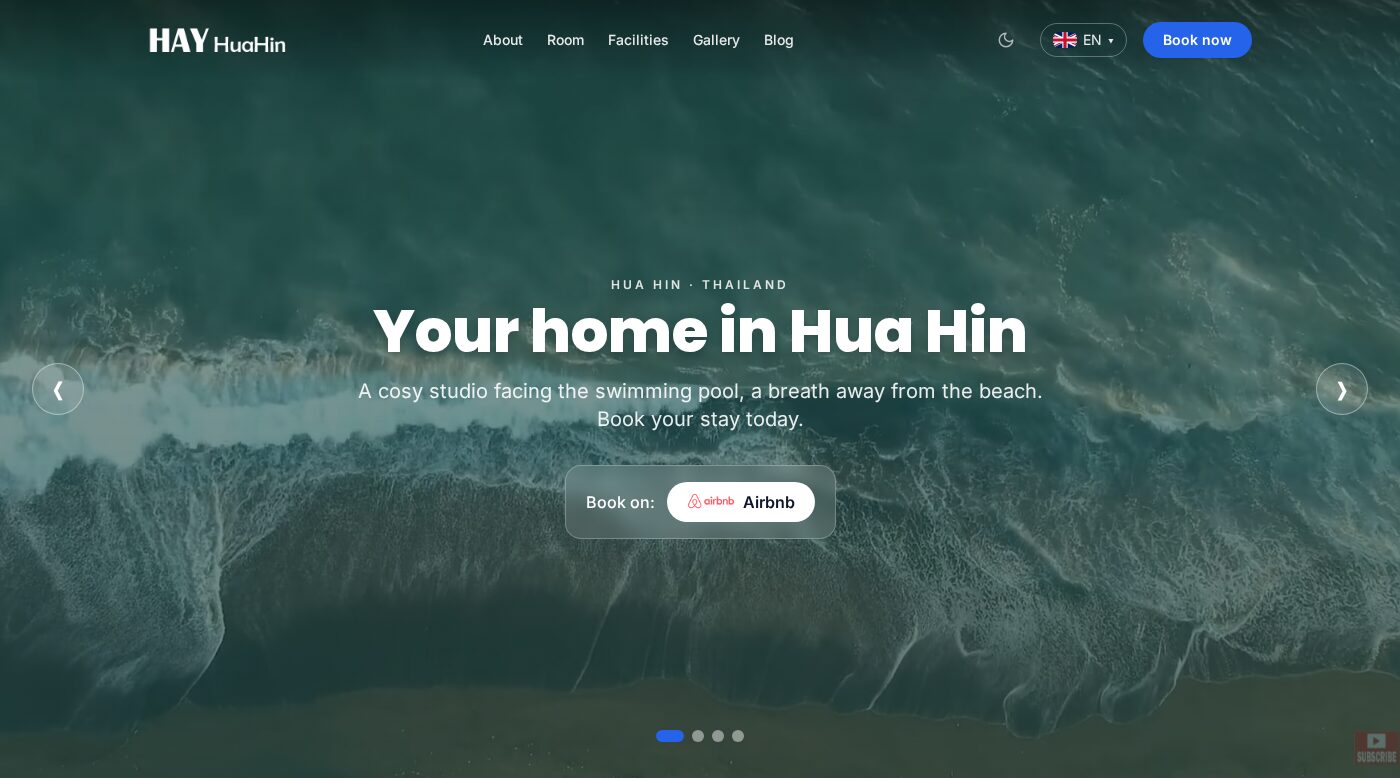
HAY HuaHin
Since 2024A studio rental in Hua Hin, Thailand. Site rebuilt, hosted, deployed and optimised by us — and it is our own money going into the Google Ads campaigns.
Read the case studyarrow_forward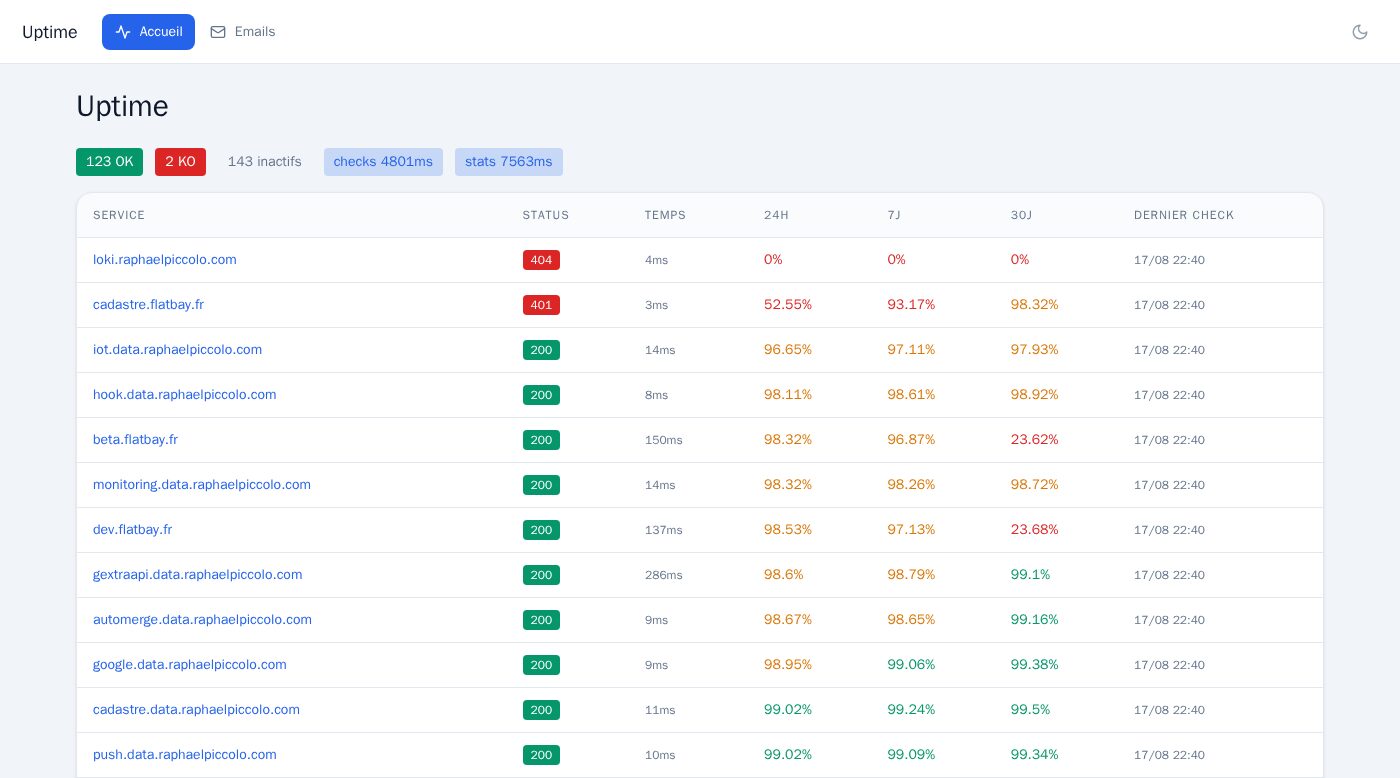
Notre flotte
Since 2010Git, continuous integration, image registry, SSO, DNS, metrics, logs, monitoring: all of it runs on our own machines, on open-source components. Not out of principle — because it holds load better, costs a fraction, and does not stop when a vendor changes its mind.
Read the case studyarrow_forwardFrequently asked questions
- Do we have to stop working during the migration?
- No, that is the whole point of migrating in pieces. Your teams keep working, and move over screen by screen. We are currently running several migrations of this kind on applications used every day.
- Will you take over code written by someone else?
- That is a large part of our work. PHP, Symfony, WordPress, older Node: we take it over, we stabilise it, then we decide together what is worth migrating and what can stay as it is.
- How long does it take?
- A serious migration takes months, sometimes years on a large application. But the business does not wait for the end: from the first batch you get faster screens that are easier to change.
Also in “Build”
Custom software development
The application your business runs on, when nothing off the shelf fits.
webWebsite design and rebuild
A fast site that says what you do, and makes people want to call.
smart_toyAI and process automation
We identify what AI can genuinely absorb in your business, and take it all the way to production.
smartphoneMobile applications
One codebase for iOS and Android, published on both stores.
hubIntegrations and business APIs
Getting your tools to talk to each other, so nobody re-keys the same data twice.
monitoringData and dashboards
The right figure, in one place for everyone, updated on its own.
Let's talk about your project
Thirty minutes is enough to tell whether we are the right fit. We reply within 48 hours, and we say no when it is not for us.