
Run
CI/CD and DevOps
Deploying should be a non-event, several times a week, with no meeting.
When deploying is frightening, you deploy rarely; when you deploy rarely, each release carries three months of change, and that is precisely what breaks. Getting out of that loop is mechanical: automate until publishing takes one command. For us, a release starts from a command line, runs the tests, builds the image, deploys it, and rolling back means redeploying the previous version. What that produces, measured over the last thirty days: around 150 production releases a day across 65 projects, with no meeting and no deployment window. That is the pipeline we set up for our clients.
The method
How we work
- 01
We make the build reproducible
Dependency versions pinned, image built identically every time. “It works on my machine” is a symptom of a non-reproducible environment, not a fact of life.
- 02
We run the tests on every change
Automatically, before any deployment. A test you run by hand when you think of it protects nothing.
- 03
We deploy without downtime
The new version starts, proves it responds, then the old one stops. If it does not respond, it is abandoned and the service carries on with the old one.
- 04
We keep rollback within reach
Every version stays deployable. Going back takes a minute, which makes deploying low-risk — therefore frequent, therefore even lower-risk.
What you get
Deliverables
- check_circleThe build and deployment pipeline in place, triggered automatically
- check_circleSeparate environments: development, staging, production
- check_circleThe release and rollback procedure, on a single page
- check_circleThe history of deployed versions, with what each one contained
The proof
Where we have done it
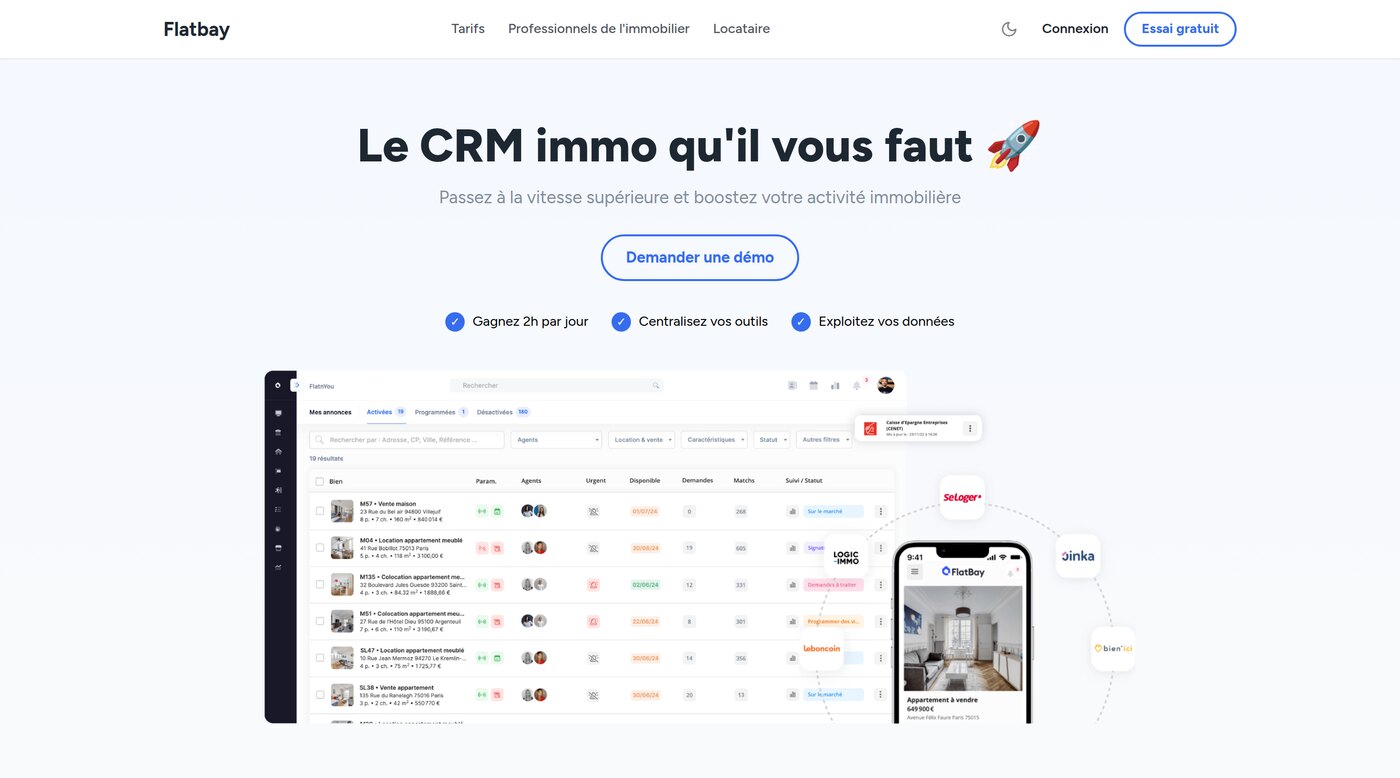
FlatBay
Since 2015Agencies drowning in incomplete files. An assistant that chases missing documents, computes the affordability ratio, and only passes on complete applications.
Read the case studyarrow_forward
Gextra
Since 2010Admissions, care records, staff scheduling, billing, mobile apps. A complete business system, being migrated screen by screen to modern technology without stopping the work.
Read the case studyarrow_forward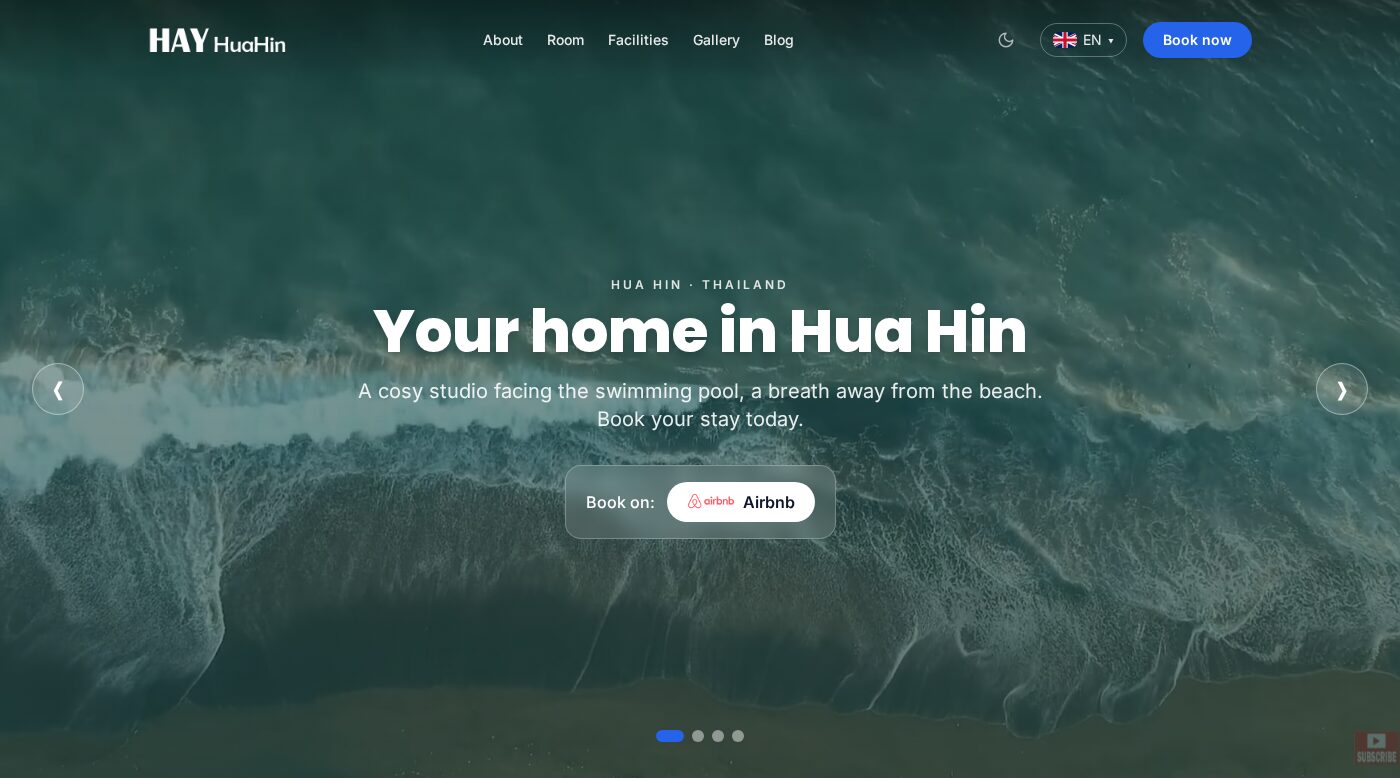
HAY HuaHin
Since 2024A studio rental in Hua Hin, Thailand. Site rebuilt, hosted, deployed and optimised by us — and it is our own money going into the Google Ads campaigns.
Read the case studyarrow_forward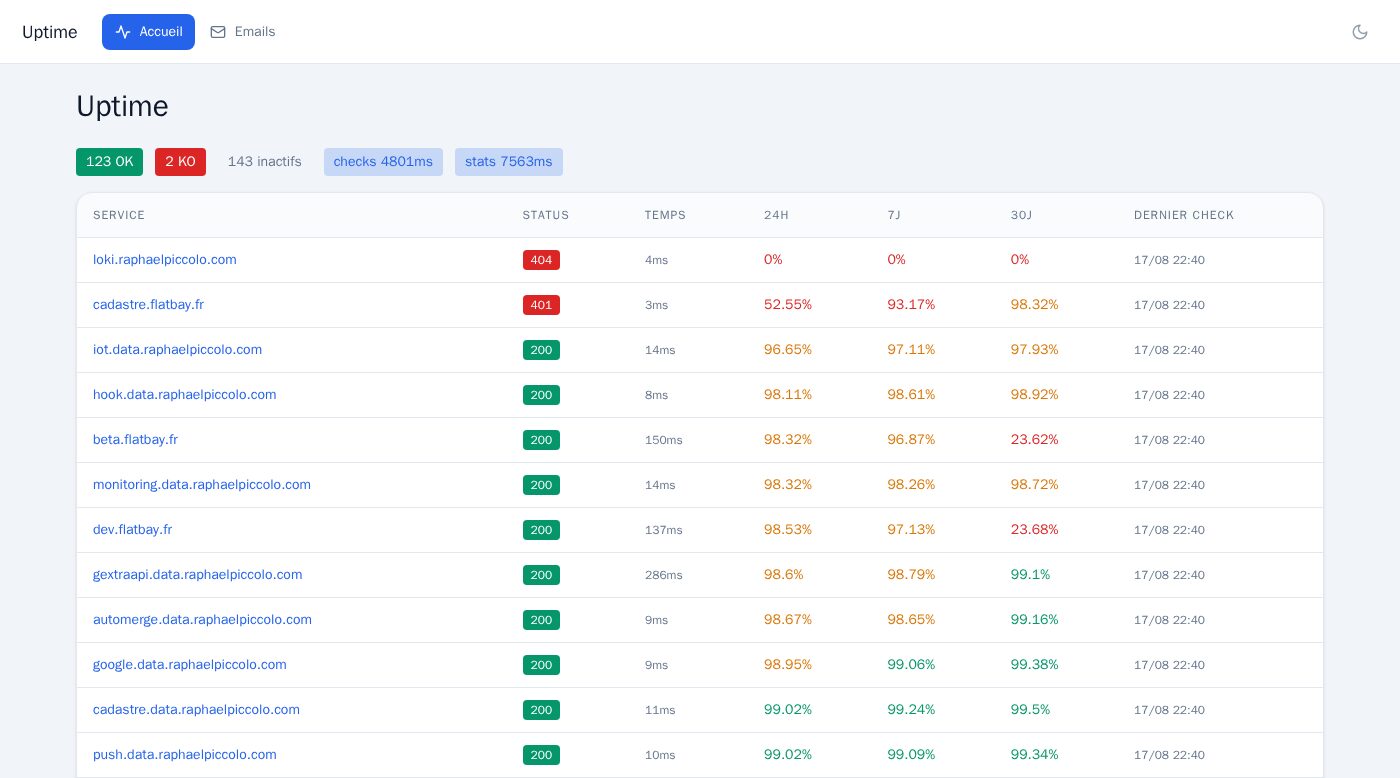
Notre flotte
Since 2010Git, continuous integration, image registry, SSO, DNS, metrics, logs, monitoring: all of it runs on our own machines, on open-source components. Not out of principle — because it holds load better, costs a fraction, and does not stop when a vendor changes its mind.
Read the case studyarrow_forwardFrequently asked questions
- We have no tests. Is that a blocker?
- No. We install the pipeline first, then add tests on whatever breaks most often — usually calculations and business rules. Waiting for full coverage before automating means never starting.
- Kubernetes?
- Rarely justified below a certain scale. We run dozens of applications in production on much simpler orchestration that two people can understand entirely. Choosing a tool you do not master moves the risk, it does not reduce it.
- Will you work on an existing pipeline?
- Yes. GitHub Actions, GitLab CI, Jenkins: the principle is the same. We take over what exists, make it reliable, and only replace it if maintaining it costs more than rebuilding it.
Also in “Run”
Infrastructure and hosting
Your servers, held by people who administer them daily for other clients too.
speedWeb performance
A slow site loses customers before it has introduced itself. That can be measured and fixed.
monitor_heartMonitoring and on-call
Knowing the site is down before your customer calls to tell you.
mark_email_readEmail and deliverability
Do your automated emails actually arrive? Usually, some of them do not.
Let's talk about your project
Thirty minutes is enough to tell whether we are the right fit. We reply within 48 hours, and we say no when it is not for us.