
Build
Integrations and business APIs
Getting your tools to talk to each other, so nobody re-keys the same data twice.
A company always ends up with several tools each holding part of the truth, and somebody whose job is copying one into the other. We connect those tools. The difficulty is almost never the technical call: it is what happens when the partner answers badly, when an identifier changes, or when a feed stops without warning. A connector that fails silently is worse than no connector — it manufactures wrong data nobody questions.
The method
How we work
- 01
We establish who holds the truth
For each shared field, one system is authoritative. Without that decision, two tools correct each other in a loop and nobody knows which amount is right.
- 02
We code the feed and its failure cases
Resuming after an interruption, duplicates made impossible, one invalid record handled without blocking the next. That is where reliability lives, not in the happy path.
- 03
We log every exchange
What went out, what came back, when. The day a partner claims they received nothing, that log settles the discussion in thirty seconds.
- 04
We monitor and alert
A feed that should have run overnight and did not raises an alert. The absence of errors is not proof that things are working.
What you get
Deliverables
- check_circleThe connector in production, with its schedule and its retry behaviour
- check_circleA searchable log of exchanges, with what was sent and received
- check_circleAlerts on interruption or abnormal error rates
- check_circleFormat documentation, so your partner knows what to fix on their side
The proof
Where we have done it
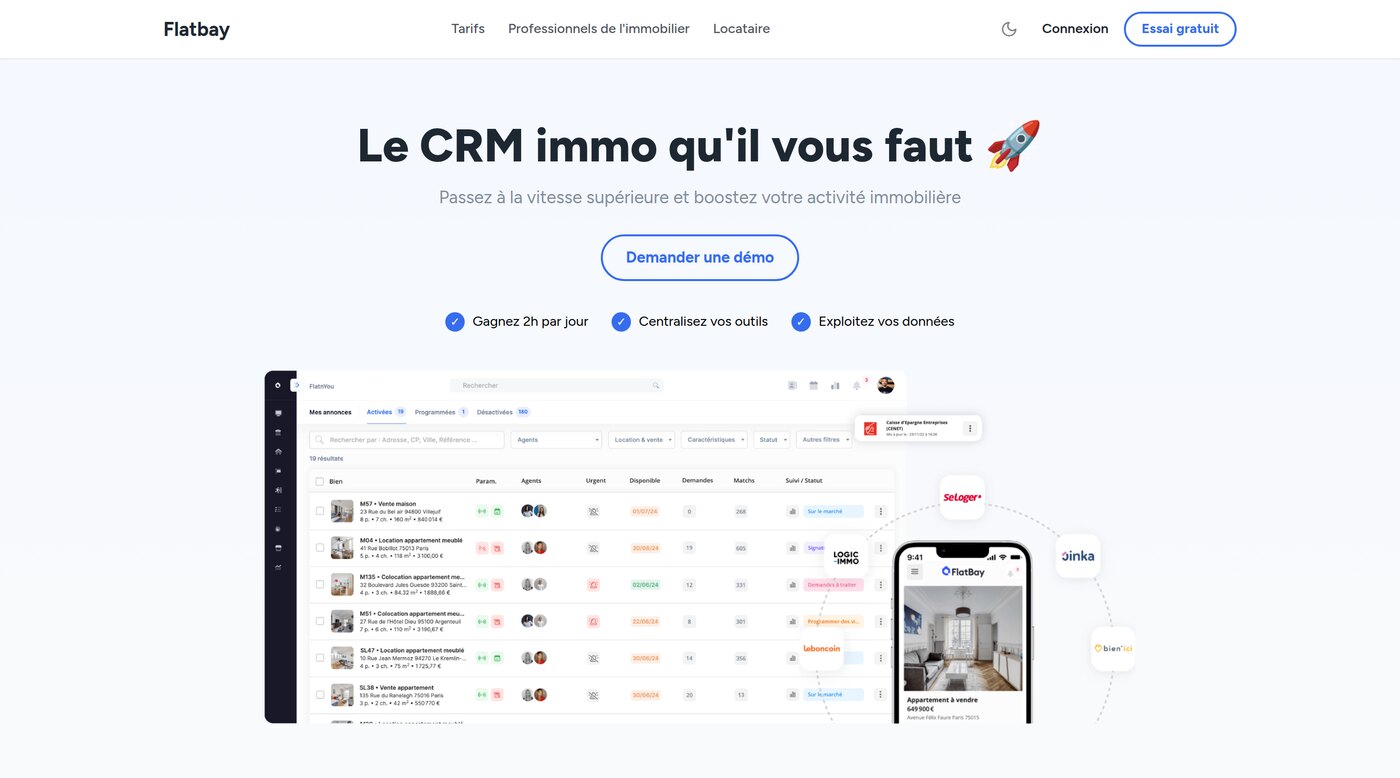
FlatBay
Since 2015Agencies drowning in incomplete files. An assistant that chases missing documents, computes the affordability ratio, and only passes on complete applications.
Read the case studyarrow_forward
Gextra
Since 2010Admissions, care records, staff scheduling, billing, mobile apps. A complete business system, being migrated screen by screen to modern technology without stopping the work.
Read the case studyarrow_forward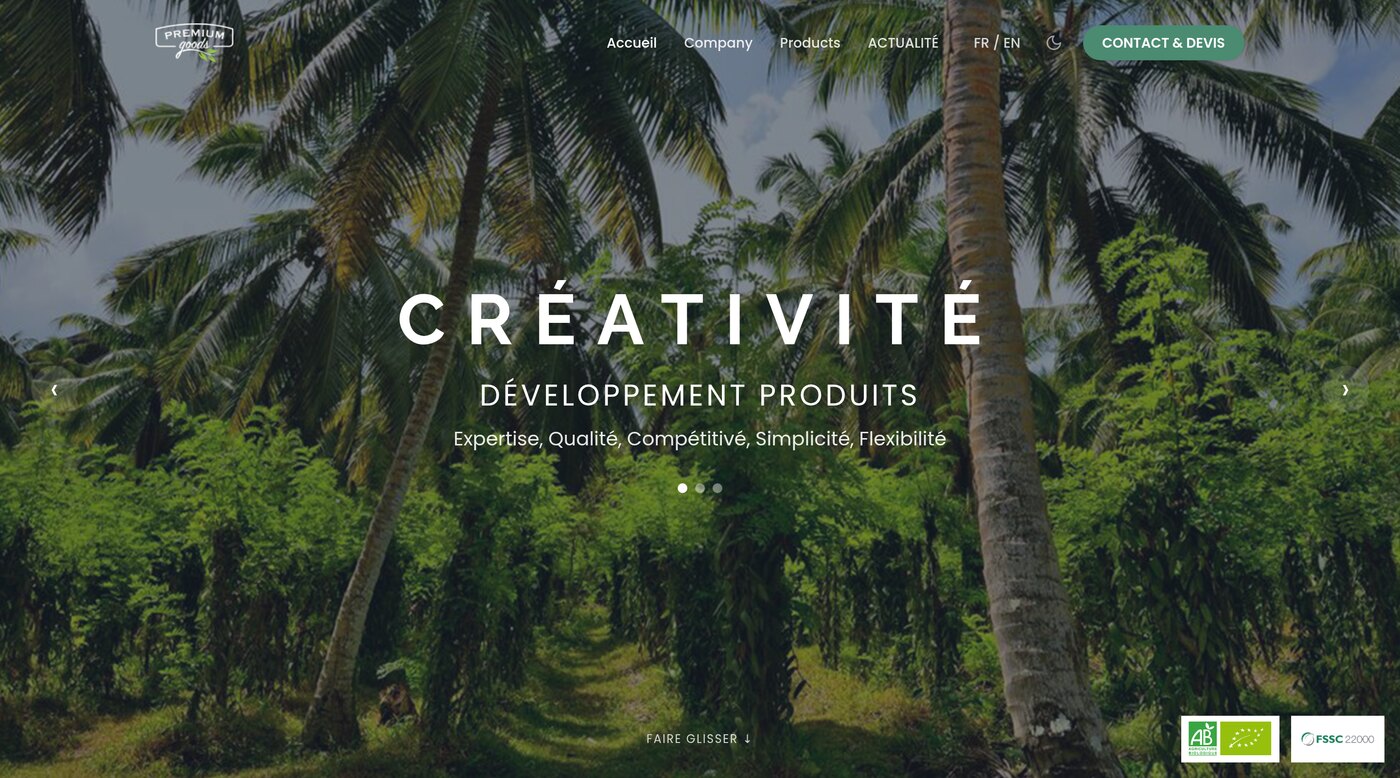
Premium Goods
Since 2019An online shop and the internal tool that runs it: stock, orders, suppliers, field work. Modernised progressively, without ever closing.
Read the case studyarrow_forwardFrequently asked questions
- What if the other system has no API?
- There is almost always a door: a scheduled export, a file drop, a structured email. It is less elegant than an API, it works perfectly well, and we run several of them in production.
- Who answers when the partner changes their format?
- We do, if you have a support contract. A partner changing format without warning is a normal scenario, not an exceptional one: the alert fires, we fix it, and the feed restarts catching up what was missed.
- Can you also expose an API for our partners?
- Yes, in both directions. Exposing a documented API is often what lets a client embed you in their own system — and therefore keep you longer.
Also in “Build”
Custom software development
The application your business runs on, when nothing off the shelf fits.
webWebsite design and rebuild
A fast site that says what you do, and makes people want to call.
smart_toyAI and process automation
We identify what AI can genuinely absorb in your business, and take it all the way to production.
move_upLegacy migration and code takeover
An application nobody dares touch any more, brought back into shape without stopping the business.
smartphoneMobile applications
One codebase for iOS and Android, published on both stores.
monitoringData and dashboards
The right figure, in one place for everyone, updated on its own.
Let's talk about your project
Thirty minutes is enough to tell whether we are the right fit. We reply within 48 hours, and we say no when it is not for us.